The Ruling That Changed Everything for AI Creators
Advertisement
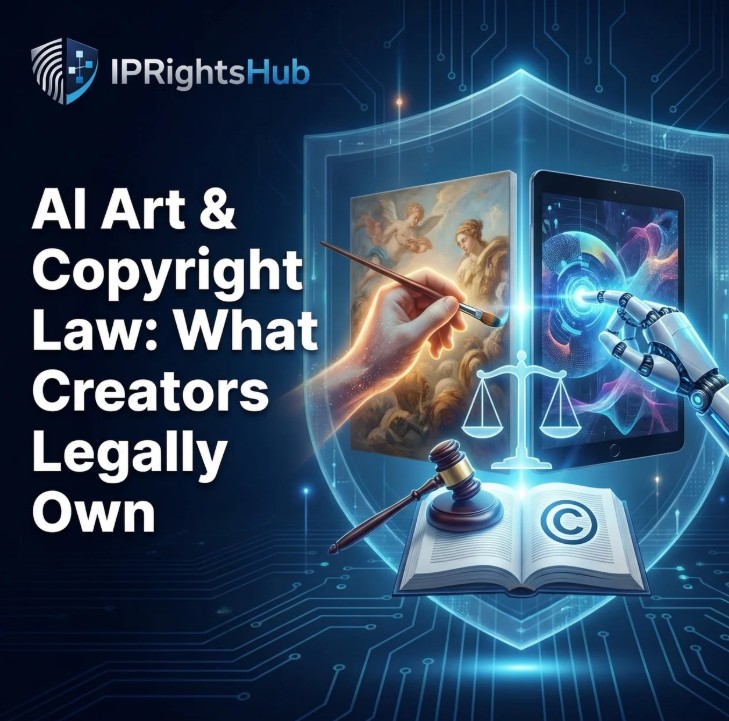
In March 2026, the US Supreme Court declined to hear the appeal in the Thaler v. Perlmutter line of cases, effectively cementing what the federal appeals court had already ruled: art created solely by AI cannot be copyrighted under US law.
For millions of creators who have built workflows, product lines, and entire businesses around tools like Nano Banana 2, Kling 3.0, Midjourney, DALL·E, and Stable Diffusion, this wasn't just a legal footnote. It was a direct hit to the assumption that "I made it, I own it."
Advertisement
The frustration online has been palpable. Threads on r/WritingWithAI and r/COPYRIGHT are full of creators describing the same realisation: "As of 2025, copyright legislation implies that I possess no ownership. The current framework treats AI as the creator rather than acknowledging the human operator behind it."
Here's what actually changed, what it means for your work, and — critically — where the protectable grey zone still exists.
Need help? Our tools can help you identify potential IP conflicts before they become costly problems. Try a free scan →
The Core Rule (And Why Everyone Gets It Wrong)
Advertisement
The US Copyright Office has been consistent: copyright requires human authorship. What the 2025 Copyrightability Report and subsequent court decisions confirmed is that this isn't a formality — it's a hard filter.
Pure AI-generated outputs are public domain upon creation. Not after a waiting period. Not after you fail to register them. The moment the image is generated by the AI without sufficient human creative intervention, it enters the public domain and anyone can use, sell, or replicate it.
This is where the biggest community misconception lives. Many creators believe:
Advertisement
- Their prompt = their creative work = their copyright
- Their subscription to Midjourney = ownership of outputs
- The platform's terms of service = legal protection
Need help? Our tools can help you identify potential IP conflicts before they become costly problems. Try a free scan →
None of these are true.
Typing a text prompt, even a detailed and technically sophisticated one, does not currently meet the "sufficient creative control" threshold the Copyright Office requires. You directed the machine. The machine made the creative choices at the pixel level. That distinction is the entire ball game.
Advertisement
Platform terms compound the confusion. When Midjourney's terms say "you own the assets you create," or when another tool says "to the extent possible under current law," those are contractual claims about your right to use the output — not legally enforceable copyright ownership. The platform can grant you a commercial licence. It cannot grant you a copyright that doesn't legally exist.
Where Protection Still Exists: The Human Authorship Threshold
Here's where it gets more nuanced, and where most articles shortchange creators.
Advertisement
The US Copyright Office does register AI-assisted works — when the human contribution is meaningful and documentable. The key 2025 decisions show that the Office evaluates this on a case-by-case basis, but patterns have emerged from approved and rejected applications.
What has worked:
- Iterative inpainting and selective modification: Where a creator repeatedly selects, rejects, masks, and repaints specific regions of an AI output, the cumulative creative choices can constitute human authorship over those modified sections.
- Compilation protection: A creator who curated, arranged, and selected from hundreds of AI-generated images — making human creative decisions about composition, sequence, and editorial selection — received protection for the compilation, even though the individual images themselves remained unprotected.
- Text-plus-image hybrid works: In cases where original human-written text is combined with AI imagery, the textual portions are fully protected. The compilation arrangement may also be protected. The individual AI images are not.
Advertisement
What has consistently failed:
- Single AI-generated images with no post-processing
- Outputs where the creator's contribution was limited to writing the prompt
- Works where the creator "trained on their own art" but let the model make all generative decisions — the training process doesn't transfer your copyright to the output
Need help? Our tools can help you identify potential IP conflicts before they become costly problems. Try a free scan →
If you're building a workflow you intend to register, the documentation matters enormously. Keep your prompt history, your editing layers, your own source assets, and a written description of your creative decision-making process. The Copyright Office wants to see evidence of human creative control, not just a good-looking final image.
Advertisement
The Practical Scenario Matrix
Rather than abstract principles, here's how this plays out across common creator business models in 2026:
POD Merch Seller (Etsy, Redbubble, Merch by Amazon)
Advertisement
You generate designs in Midjourney, download them, and list products. What you own: a commercial licence to use the output per Midjourney's terms. What you don't own: any copyright. Anyone can legally download your listed product images, generate something visually identical, and sell it themselves — because the underlying design is public domain. Your only defensible position is if you've done substantial post-processing in Photoshop or similar tools, at which point the human creative additions may be protectable.
Need help? Our tools can help you identify potential IP conflicts before they become costly problems. Try a free scan →
Freelance Illustrator Using AI Overpaint
You generate an AI base image, then heavily overpaint it with digital brushes, rework the composition, and add original elements. What you own: copyright in the human-created additions and modifications. The final composite's human-authored elements are yours. The AI-generated base layer is not. When registering, you'd disclaim the AI-generated portions and claim the human creative elements.
Advertisement
Startup Using AI-Generated Brand Visuals
You've used AI to generate your logo, product imagery, and marketing assets. What you own: the right to use them commercially (per tool ToS). What you don't own: the ability to stop a competitor from using a visually identical image. This is where running a Logo Image Similarity check before finalising brand assets matters — not just to check you're not infringing someone else's trademark, but to understand your exposure if someone replicates your aesthetic. Before building brand equity on AI-generated visuals, check whether those visuals are distinguishable enough to carry trade dress arguments even without copyright.
Artist Checking Whether AI Has Replicated Their Style
Advertisement
If you're a human artist and you're seeing AI-generated work that looks suspiciously close to your established style, this is a separate and active legal battleground. Style itself isn't copyrightable, but specific original compositions and artworks are. Tools like the Art / Illustration Checker can help you document visual similarity if you're building an infringement case or DMCA claim.
The TOS Trap: Ownership vs Control
One concept almost nobody explains clearly: legal ownership and contractual control are completely different things.
Advertisement
Your AI images might be public domain — meaning legally, no one owns them — but your platform can still:
- Gate access to your generations behind an active subscription
- Hold an irrevocable licence to use your outputs and prompts for model training
- Prevent you from exporting or reusing generations if you cancel your account
- Claim certain commercial rights in their own terms
Need help? Our tools can help you identify potential IP conflicts before they become costly problems. Try a free scan →
"Digital feudalism" is how some creators describe this architecture: the law says no one owns the work, but the platform controls access to it, trains on it, and profits from the aggregate. You're not being sold a product; you're participating in a system that extracts value from your creative direction.
Advertisement
Before building any commercial workflow around an AI art tool, read the licence and TOS carefully. Specifically look for: irrevocable licence language, what happens to your generations on account termination, whether commercial use requires a paid tier, and what the platform can do with your prompts. Google's AI tools have made "Copilot Copyright Commitment"-style indemnity promises. Most platforms have not.
The International Picture (A Quick Map)
Most of what's covered in this article is US law. The international picture is fragmented:
Advertisement
UK: British courts and the Copyright, Designs and Patents Act 1988 have a concept of "computer-generated works" where the "person who makes the necessary arrangements" for the work may own it. This is more permissive than the US position, though it remains contested and untested at the highest levels.
Need help? Our tools can help you identify potential IP conflicts before they become costly problems. Try a free scan →
EU: The EU AI Act (fully in force 2025) focuses more on disclosure and transparency obligations for AI-generated content than on copyright ownership. The underlying copyright question follows member state law, which varies. The EU Copyright Directive also creates ongoing complexity around training data.
India: Does not explicitly recognise AI authorship; human authorship is required, though the threshold and enforcement are less developed than in the US.
Advertisement
If you're creating for global audiences or licensing across borders, the law that applies to your work isn't just determined by where you live — it can also be influenced by where the platform is incorporated and where you're distributing.
Three Rules to Operate By in 2026
After all the case law and policy reports, the practical operating heuristics come down to this:
Advertisement
1. Pure AI output = assume public domain. Build business models that don't rely on exclusive ownership of AI-generated visuals unless you've documented meaningful human creative intervention.
2. Human creative additions are yours. Substantial post-processing, selection, arrangement, and original elements you contribute are protectable. Document everything and register with appropriate AI disclaimers on the application.
3. Platform licence ≠ copyright. Know exactly what your tool's ToS actually gives you — and what it keeps for itself. Commercial use rights and copyright are not the same thing.
Advertisement
The creators getting blindsided in 2026 are the ones who built workflows assuming the legal landscape matched the marketing language. It doesn't. But knowing the actual rules is the competitive edge — because most people in your market still don't.