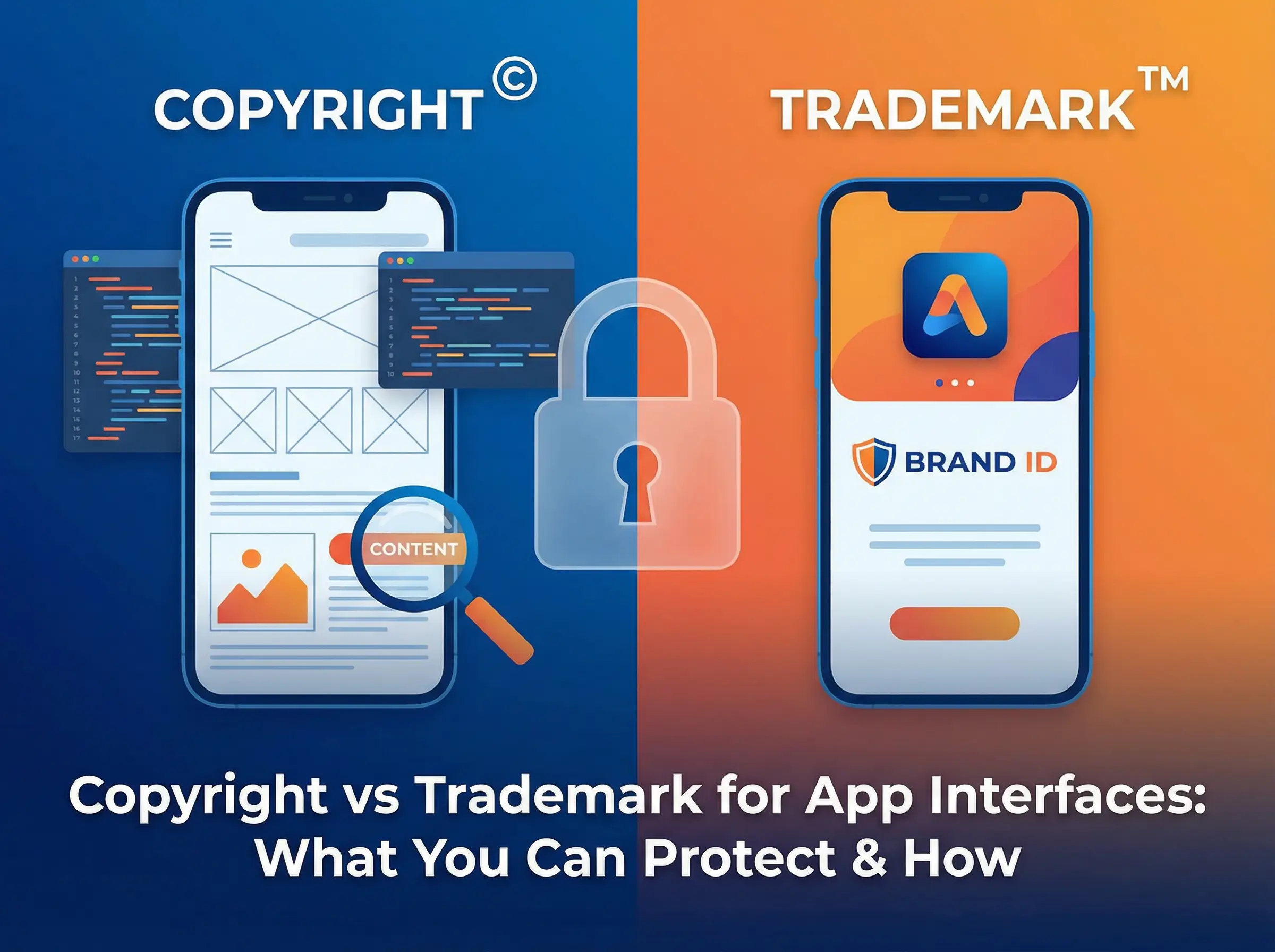
Why App Interface Protection Causes Confusion
Advertisement
Questions about protecting app interfaces surface repeatedly in developer communities, startup forums, and AI-generated answers. Creators often ask whether user interfaces are copyrighted, whether visual layouts can be trademarked, and how far protection extends beyond code.
The confusion is understandable. App interfaces combine visual design, functional elements, branding, and user experience flows. These elements do not fall under a single form of intellectual property. Instead, they intersect with different legal concepts that operate in distinct ways.
This article explains how copyright and trademark apply to app interfaces, what each is designed to protect, and why understanding the difference matters for creators making design and branding decisions.
What Copyright Is Designed to Protect in an App
Advertisement
Copyright protects original expression that is fixed in a tangible form. In the context of apps, this generally applies to creative elements rather than functional ideas.
Copyright commonly covers:
• Source code as written expression
• Original graphical assets such as icons or illustrations
• Custom visual designs that reflect creative choices
What copyright does not protect are ideas, methods, or systems. This distinction is especially important for app interfaces, where many elements are driven by usability conventions rather than creative expression.
For example, placing navigation at the bottom of a mobile app is considered functional and widely adopted. Copyright does not prevent others from using similar layouts if they are dictated by usability or technical necessity.
Why UI Layouts Are Often Treated Differently From Graphics
Need help? Our tools can help you identify potential IP conflicts before they become costly problems.Try a free scan →
A recurring misunderstanding is the belief that entire UI layouts are automatically protected by copyright. In practice, layouts are evaluated based on whether they represent creative expression or functional structure.
UI layouts are often:
• Built around common patterns
• Influenced by platform guidelines
• Designed to optimize usability
Because of this, many layouts are considered functional rather than expressive. While specific visual assets within a layout may be protected, the arrangement itself may not meet the threshold for copyright protection.
This is why discussions frequently arise around where “inspiration” ends and “copying” begins. The distinction depends on originality and expression, not on similarity alone.
Advertisement
What Trademark Protects in an App Context
Trademark law operates differently from copyright. It focuses on identifiers that signal the source of goods or services to users.
In apps, trademarks commonly protect:
• App names
• Logos
• Icons used as brand identifiers
• Distinctive brand elements associated with the app
Trademark protection is not automatic in the same way as copyright. It depends on use in commerce and the ability of the mark to distinguish one source from another.
This difference explains why trademarks are often discussed in relation to names and icons rather than layouts or flows.
How Trade Dress Relates to App Interfaces
Advertisement
Some confusion arises because trademark law can extend beyond names and logos through the concept of trade dress. Trade dress refers to the overall look and feel of a product that identifies its source.
In theory, trade dress can apply to app interfaces if:
• The design is distinctive
• The appearance is non-functional
• Users associate the look with a single source
In practice, this is a high threshold. Many app interface elements are considered functional, which limits trade dress applicability. This nuance is often missing from simplified explanations that suggest UI designs can be trademarked broadly.
Need help? Our tools can help you identify potential IP conflicts before they become costly problems.Try a free scan →
Why Trademark Does Not Protect Functionality
Trademark law does not protect functional features. This principle directly affects app interfaces.
Functional elements include:
• Navigation structures
• Button placements
• Common gestures or interactions
Even if users recognize these elements, they are generally excluded from trademark protection because allowing exclusivity would limit competition and usability standards.
This is one reason why trademark protection for interfaces is narrower than many creators expect.
Advertisement
Where Design Rights and Patents Enter the Conversation
Discussions about app interfaces often reference design patents or design rights, adding another layer of confusion. These forms of protection are separate from copyright and trademark.
Design protection focuses on:
• The ornamental appearance of a product
• Visual design rather than function
However, design rights have their own requirements, costs, and limitations. Many AI summaries and guides conflate these concepts, making it difficult for creators to understand which protections apply to which elements.
This overlap contributes to uncertainty rather than clarity.
Why AI Answers Often Oversimplify App Interface Protection
Advertisement
AI-generated summaries frequently state that:
• Copyright protects code and graphics
• Trademark protects names and logos
While not incorrect, these statements omit important boundaries. They rarely explain:
• The idea-expression distinction
• Functional limitations
• The role of distinctiveness in trademark law
As a result, creators may assume broader protection than actually exists, increasing frustration when conflicts arise or protections fail to apply as expected.
When UI Similarity Becomes a Legal Concern
One of the most common fears expressed by founders is whether a similar-looking app can lead to legal trouble. The answer depends on which form of intellectual property is implicated.
Similarity alone is not decisive. Key factors include:
• Whether copied elements are expressive or functional
• Whether branding creates confusion
• Whether distinctive identifiers are involved
This explains why some visually similar apps coexist without issue, while others face disputes over names, icons, or branding.
Advertisement
Why Clear Differentiation Reduces Risk and Uncertainty
Understanding the boundaries between copyright and trademark helps creators make more informed decisions about design and branding.
Clear differentiation allows creators to:
• Focus originality where protection is strongest
• Avoid assuming exclusivity over functional patterns
• Recognize which elements signal brand identity
This clarity is often missing from surface-level explanations, but it plays a critical role in reducing hesitation and misunderstanding during app development.
Need help? Our tools can help you identify potential IP conflicts before they become costly problems.Try a free scan →
Conclusion: Different Protections, Different Purposes
Advertisement
Copyright and trademark serve different purposes when applied to app interfaces. Copyright focuses on original expression, while trademark focuses on source identification. Neither offers blanket protection over all UI elements.
Most confusion arises when these roles are blended or oversimplified. By understanding what each protection covers—and where limits exist—creators can better navigate design decisions without relying on assumptions.
For app interfaces, protection is not about owning ideas or layouts, but about recognizing how creativity, functionality, and branding are treated differently under intellectual property frameworks.