The Wake-Up Call Nobody Wants
Advertisement
You've spent six months building your app. You've got ratings, organic installs, maybe even some press. Then one morning, an email lands from Apple's legal team — or worse, a lawyer representing a company you've never heard of — and it turns out someone trademarked your app name before you did.
This isn't a hypothetical. It's a pattern that plays out constantly in communities like r/startups, r/gamedev, and r/iOSProgramming. Founders who assumed that owning the domain or having the most App Store ratings meant they "owned" the name. They didn't.
Advertisement
In 2026, with AI-powered app development compressing build timelines from months to weeks, more apps are launching faster than ever — which means name conflicts are escalating. If you're building something real, this guide is the one you wish existed at the start.
What a Trademark Actually Does (For App Builders Specifically)
Need help? Our tools can help you identify potential IP conflicts before they become costly problems. Try a free scan →
A trademark protects your brand identifier — in this case, your app's name and potentially its logo — not the idea, the code, or the functionality. It gives you the exclusive right to use that name in your category and, crucially, a registered trademark gives you legal standing to enforce that right against copycats and to dispute conflicting names on app store platforms.
Advertisement
Here's what most guides don't tell you: Apple and Google do not proactively police name conflicts. They respond to complaints. And the party with a registered trademark has a significantly stronger position when filing those complaints than one relying on common law or domain ownership alone.
There's also a common misconception about the ™ symbol. You can use ™ next to your name the moment you start using it in commerce — it signals a claim to the name. But it is not a substitute for registration. The ® symbol (Registered Trademark) only applies after a trademark office formally approves your application. The difference matters enormously in a dispute.
When Should You Actually File? A Scenario-Based Answer
Advertisement
This is the question everyone is actually asking, and most guides dodge it by saying "as early as possible." Let's be more useful.
Need help? Our tools can help you identify potential IP conflicts before they become costly problems. Try a free scan →
Scenario 1: Pre-Launch (Idea Stage to Prototype)
You haven't shipped yet. You're not generating revenue. Here's the honest answer: you don't necessarily need to file immediately, but you should absolutely do a clearance search before you go any further.
Advertisement
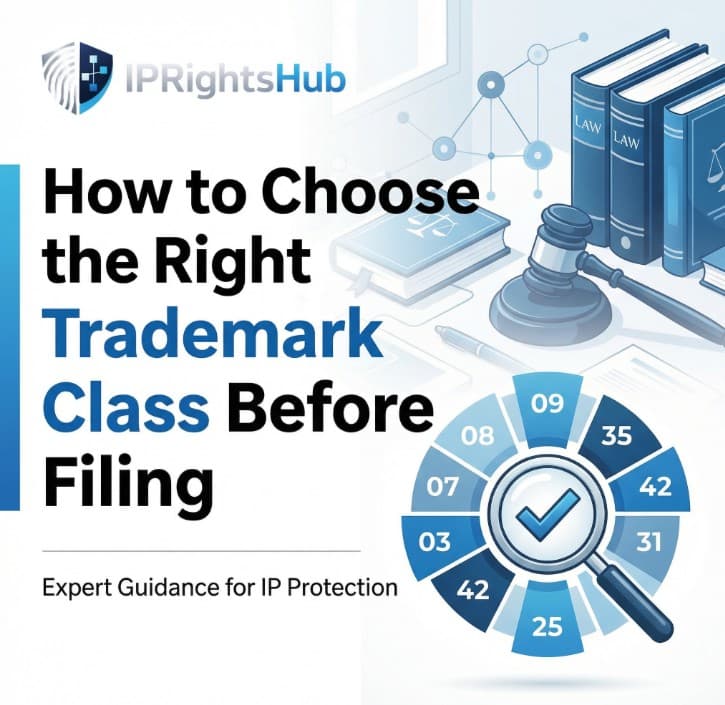
A clearance search isn't just typing your name into the App Store search bar. It means checking the USPTO TESS database (for US), EUIPO (for EU), and WIPO's Global Brand Database — for any existing trademarks in Class 9 (downloadable software) and Class 42 (software-as-a-service and online platforms), which are the two classes most relevant to apps.
If your name is clear, you're safe to build — and filing an "Intent to Use" application in the US (called a 1(b) filing) lets you establish your priority date before you've even launched. This is underused by indie founders and it's one of the smartest moves available.
If your name is even close to something that already exists, especially in the same category — rename now. It costs nothing compared to rebranding after you have users, reviews, and SEO equity attached to a name you can't keep.
Advertisement
Scenario 2: Small but Growing (Under 10,000 Users)
At this stage, your instinct might be "wait until we're bigger." That's understandable from a cost perspective, but the risk math is changing against you as you grow. The more traction you build under an unprotected name, the more you stand to lose if a conflict emerges.
In the US, you do have common law trademark rights that begin the moment you use a name in commerce. These offer some protection, particularly in your geographic area of use. But common law rights are hard to enforce, expensive to prove, and do nothing for you in first-to-file jurisdictions like the EU, China, or India.
Advertisement
If you're seeing real user growth, file in your primary market. For most English-language apps targeting a global audience, that means the USPTO first, with EU filing queued up as soon as budget allows.
Scenario 3: You're Facing a Conflict Right Now
Need help? Our tools can help you identify potential IP conflicts before they become costly problems. Try a free scan →
Someone has filed a complaint about your app name, or you've discovered another company using the same name. What now?
Advertisement
First, don't panic and don't rename immediately. Assess the actual risk: are they in the same category? Do they have a registered mark? Are they in your target markets?
Two companies can trademark the same name as long as they operate in genuinely different industries with no realistic consumer overlap. A "Pixel" fitness app and a "Pixel" hardware product can coexist in trademark terms — but the closer your categories are, the thinner that argument gets.
If a company with a registered mark in your exact class is demanding you change your name, that's a serious situation requiring a trademark attorney, not a Reddit thread. If it's someone without registration claiming rights — that's a negotiation, not a legal certainty.
Advertisement
For app store disputes specifically: if someone files a complaint with Apple or Google claiming your name infringes their trademark, the platform will typically ask for your response, including any evidence of your own prior use or registration. Having a registration at this point transforms your position from "we were here first" (which is hard to prove quickly) to "here is our registered mark" (which is instant and decisive).
Need help? Our tools can help you identify potential IP conflicts before they become costly problems. Try a free scan →
Scenario 4: Preparing for Acquisition or Investment
Investors and acquirers run IP due diligence. Unregistered app names are a flag. If you're entering any kind of funding or acquisition conversation, trademark registration isn't optional — it's table stakes. A pending application at minimum, a granted registration ideally.
Advertisement
The Right Trademark Classes for Apps
This trips up almost every developer who files without a lawyer.
Most apps need to consider at minimum:
Advertisement
Class 9 — For downloadable software applications. This covers your app as a product that users download.
Class 42 — For software-as-a-service, cloud-based platforms, and online services. If your app also has a web dashboard, API access, or subscription-based online functionality, you likely need this class too.
Some apps also extend into Class 35 (business services, advertising) or Class 41 (educational or entertainment services) depending on what the app does. A fitness coaching app with live classes probably needs Class 41. A marketplace app might need Class 35.
Advertisement
Filing in the wrong class — or just one class when you need two — can leave gaps in your protection. Getting this right matters more than most founders realise.
First-to-Use vs First-to-File: What Global Distribution Actually Means
Need help? Our tools can help you identify potential IP conflicts before they become costly problems. Try a free scan →
If you're shipping on both the App Store and Google Play from day one, you're instantly operating in every jurisdiction. The trademark system hasn't caught up with this reality.
Advertisement
The US operates on a first-to-use basis: whoever used the name in commerce first generally has the stronger claim, even without registration. Common law rights exist from the moment of use.
Most of the rest of the world — EU, China, India, Australia, most of Asia — operates on a first-to-file basis: whoever files the trademark application first wins, regardless of who started using the name first.
This means a competitor in Germany could see your app, file a trademark for your name in the EU before you do, and then have legal standing to challenge your ability to operate there. This happens.
Advertisement
You don't need to file everywhere at once. Prioritise: where are most of your users? Where is most of your revenue? Where do you have the biggest growth ambitions? File there first. The Madrid Protocol lets you extend a single application to multiple countries once you have your home market filing.
Need help? Our tools can help you identify potential IP conflicts before they become costly problems. Try a free scan →
Descriptive Names Will Get Rejected
One of the most common — and most preventable — reasons trademark applications fail is that the name is too descriptive of what the app does.
Advertisement
Names like "Fitness Tracker," "Video Converter," "Recipe Finder," or "Language Helper" are almost certainly going to face rejection on descriptiveness grounds. Trademark law requires that a name be distinctive — meaning it identifies the source of the product rather than just describing what it does.
This is also why using a major brand's name in your app title — "Duolingo Helper," "Netflix Tracker," "Spotify Playlist Maker" — is a double problem. Not only will you face trademark issues from those brands directly, but the descriptive-plus-brand-name combination is almost certainly not protectable as your own mark either.
If your app name describes what your app does, you should think about whether it's registrable at all — and whether you're building brand equity around a name that can never truly be yours.
Advertisement
TM vs ® — A Quick Reference
| Symbol | What it means | When to use it |
|---|---|---|
| ™ | Unregistered trademark claim | Any time, from first use |
| ® | Registered trademark | Only after registration is granted |
| SM | Unregistered service mark | For services rather than products |
Using ® before your mark is registered is actually a federal violation in the US. Use ™ freely while your application is pending.
Advertisement
The Practical Decision Map
Here's the simplified version for indie founders operating on real budgets:
Need help? Our tools can help you identify potential IP conflicts before they become costly problems. Try a free scan →
Pre-revenue, single market, early prototype? → Do a clearance search. Use ™. File an Intent to Use application if the name is strong and distinctive.
Advertisement
Growing, multi-country users, considering funding? → File in your primary market now. Queue the second jurisdiction. Budget $300–$900 in government fees (varies by country and class count) plus attorney fees if you want help navigating classes and office actions.
Conflict emerging? → Don't rename in panic. Assess the actual registered status of the other party. Consult a trademark attorney before making any moves.
Preparing for acquisition? → Registration isn't optional. If you don't have one, start immediately — the pending application itself adds value and signals IP hygiene to buyers.
Advertisement
What an App Store Dispute Actually Looks Like
Need help? Our tools can help you identify potential IP conflicts before they become costly problems. Try a free scan →
Here's the reality that almost no guide explains properly.
When someone files an infringement complaint with Apple or Google about your app name, the platform typically puts your app into a review or removal queue and notifies you. You have a window to respond.
Advertisement
A registered trademark in the relevant class gives you a document to point to. It doesn't guarantee Apple will side with you — their policies are separate from trademark law — but it dramatically strengthens your position and gives you leverage in any subsequent negotiation.
Without registration, you're arguing common law rights or prior use, which requires evidence, takes time, and puts you in a reactive position while your app may be suspended.
The best protection against this scenario isn't reacting to it — it's preventing it with a clearance search before launch and a filing shortly after.
Advertisement
Final Thought: The Name Is the Asset
In the app economy, your name is one of your most valuable assets. It's your App Store search ranking, your word-of-mouth vector, your brand equity, and increasingly — as AI search reshapes how users discover apps — the thing that gets cited when Perplexity or ChatGPT recommends you.
Building on an unprotected name is building on sand. The clearance search costs you an afternoon. The filing costs a few hundred dollars. The rebranding after you've built traction costs you everything you've built.
Advertisement
Do it early. Do it right. And if you're not sure whether your name is clear to use, run it through an AI-powered trademark similarity tool before you go any further.