Why Trademark Symbols Cause So Much Confusion
Advertisement
TM, SM, and ® are small symbols, but they carry very different meanings. Many people assume they all do the same thing or that using one automatically gives legal protection. Others worry about whether using the “wrong” symbol could cause legal trouble. These concerns are common, and most basic explanations online do not fully address them.
This article explains what each symbol means in practical terms, when it is appropriate to use it, and what these symbols do — and do not — accomplish.
What Is the Difference Between TM, SM, and ®?
Advertisement
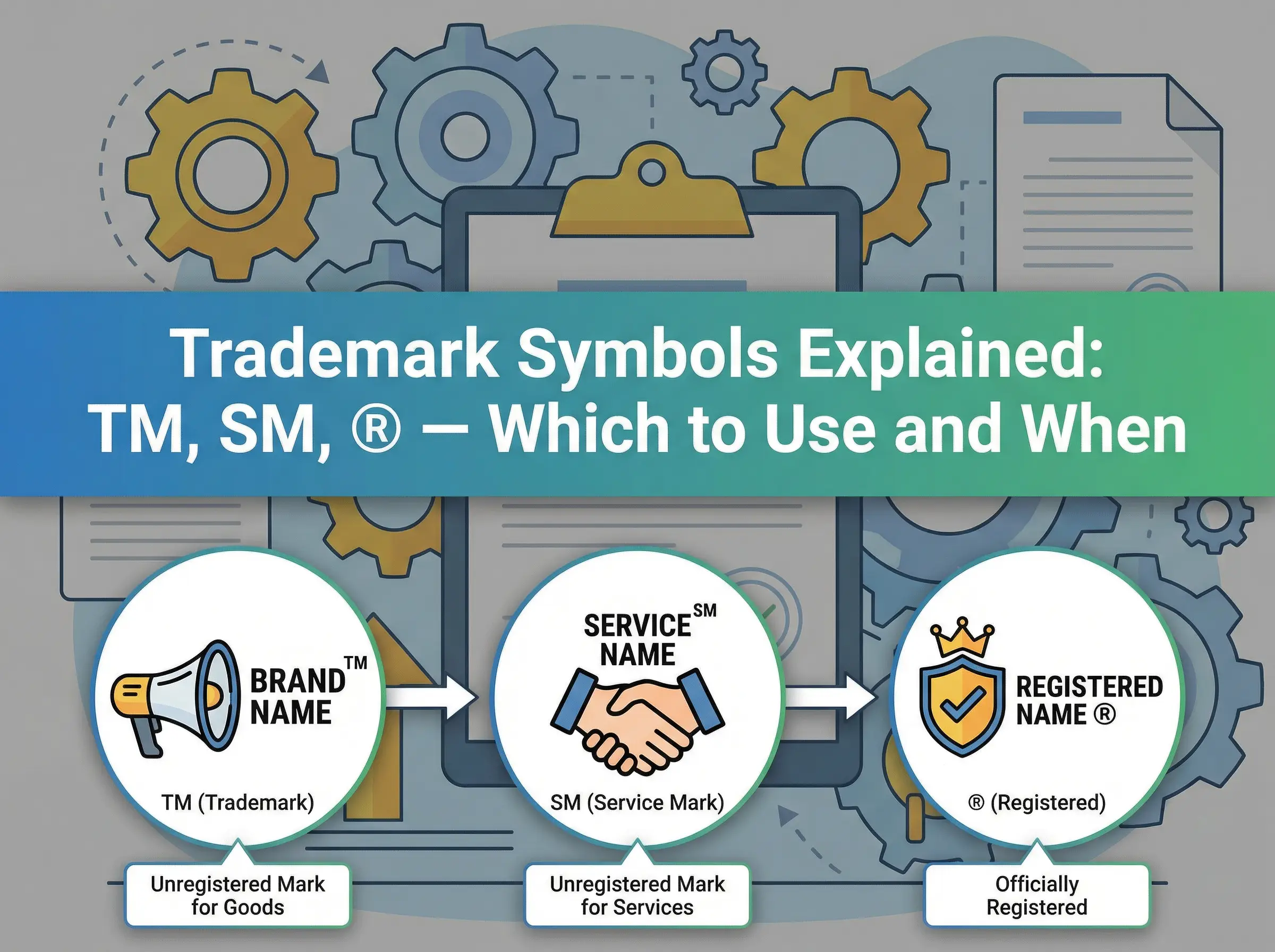
Trademark symbols signal how you are claiming rights in a name, logo, or brand identifier.
• TM is used for trademarks associated with goods (physical products).
• SM is used for service marks associated with services.
• ® is used only for trademarks or service marks that are officially registered with a government trademark office.
The symbols do not create rights on their own. They communicate the status of a mark and how you are asserting it.
What Does the TM Symbol Mean?
Need help? Our tools can help you identify potential IP conflicts before they become costly problems.Try a free scan →
The TM symbol means that you are claiming a word, logo, or phrase as a trademark for goods.
You do not need to register a trademark or get approval to use TM. It is a self-declared notice that you consider the mark to identify your products and distinguish them from others.
TM is commonly used by:
• Startups and founders before registration
• Businesses that may never register but still want to signal brand ownership
• Brands testing names or products before committing to a filing
Using TM does not mean the trademark is registered, approved, or guaranteed to be enforceable. It simply shows that you are asserting trademark use.
Advertisement
Does Using TM Mean I Have a Trademark?
Using TM does not automatically grant legal rights. Trademark rights generally come from use in commerce, not from the symbol itself.
However, TM can still be useful because:
• It signals intent to claim the mark
• It can discourage casual copying
• It helps establish a public record of how you present the brand
In some jurisdictions, consistent use of TM alongside actual commercial use may later support evidence of when a mark was first claimed, but it does not replace registration.
What Is the SM Symbol and When Should It Be Used?
Advertisement
The SM symbol stands for service mark. It serves the same purpose as TM but applies to services instead of goods.
Examples of services include:
• Software platforms
• Consulting
• Education or courses
• Marketing or design services
SM is less commonly seen in practice, and many businesses use TM even for services. While TM is often understood broadly, SM is technically more precise when no goods are involved.
Using SM is optional, but it can clarify that the mark identifies a service rather than a product.
Need help? Our tools can help you identify potential IP conflicts before they become costly problems.Try a free scan →
Can I Use TM or SM Without Registering a Trademark?
Yes. Both TM and SM can be used without any registration.
There is generally no approval process required to use TM or SM. As long as you are using the mark in connection with goods or services and are not misleading consumers, using these symbols is permitted in many jurisdictions.
This is why TM is often used during the early stages of a brand, including before a trademark application is filed or approved.
Advertisement
What Does the ® Symbol Mean?
The ® symbol indicates that a trademark or service mark is officially registered with a trademark authority.
This symbol carries a specific legal meaning. It tells the public that:
• The mark has passed formal examination
• The owner has statutory trademark rights
• The registration is active and valid in that jurisdiction
Unlike TM and SM, ® is not a general claim. It reflects a verified legal status.
When Can I Legally Use the ® Symbol?
Advertisement
You can only use ® after the trademark registration is officially granted.
You generally cannot use ®:
• While an application is pending
• Before filing an application
• For marks registered in a different country where protection does not apply
Using ® prematurely or incorrectly can be unlawful in some jurisdictions and may expose a business to penalties or enforcement issues.
Is It Illegal to Use ® If the Trademark Is Not Registered?
In many countries, yes — or at least risky.
Using ® without a valid registration can be considered misleading or false marking. This is one of the most common mistakes businesses make when trying to look “official” too early.
Because of this risk, many brands deliberately continue using TM even after registration, especially in marketing materials, to avoid jurisdictional confusion.
Advertisement
Should I Switch From TM or SM to ® After Registration?
Once a trademark is registered, using ® is generally recommended for marks covered by that registration.
However, real-world practice varies:
• Some brands use ® only in formal or legal contexts
• Others use TM consistently for visual simplicity
• Some use ® on core logos but TM on taglines or variations
The key requirement is that ® should only be used where registration actually exists and applies.
Need help? Our tools can help you identify potential IP conflicts before they become costly problems.Try a free scan →
Does Using TM Help With Trademark Protection Later?
Advertisement
Using TM does not guarantee registration or enforcement success. However, it can help in limited ways by:
• Showing consistent brand presentation
• Demonstrating intent to treat the mark as proprietary
• Supporting timelines around brand usage
The strongest protection still comes from proper registration and active use.
How Should Trademark Symbols Be Placed Visually?
There is no single required format, but common practices include:
• Superscript placement (™ or ®)
• Placement after the brand name or logo
• Using the symbol on first or prominent mentions rather than every instance
Consistency matters more than frequency. Overuse can reduce readability without adding legal value.
Advertisement
Summary: Choosing the Right Trademark Symbol
• TM: Use for goods when claiming a trademark without registration
• SM: Use for services when claiming a service mark without registration
• ®: Use only after official registration is granted and valid
Trademark symbols communicate status, not ownership itself. Using the correct symbol at the correct time helps avoid confusion, reduces risk, and accurately reflects how a brand is protected.