Why Copyright Confusion Is So Common
Advertisement
Copyright is widely mentioned but poorly understood. Many people encounter it only when they are about to publish a book, launch a website, share art online, release software, or sell digital products. At that moment, simple questions suddenly matter: Is this protected? What exactly counts? What does not?
Much of the confusion comes from oversimplified explanations that say copyright “protects creative works” without explaining the limits. This article breaks down what copyright can protect, what it cannot, and why those distinctions exist, using practical, real-world language rather than legal theory.
What Copyright Is Designed to Protect
Advertisement
Copyright exists to protect original creative expression. In practice, this means it applies to works that meet three basic conditions:
• They are created by a human author
• They are original (not copied)
• They are fixed in some tangible form
When these conditions are met, copyright generally applies automatically, without requiring formal registration in many jurisdictions. The key point is not the value or popularity of the work, but whether it qualifies as protected expression.
Types of Works Commonly Protected by Copyright
Need help? Our tools can help you identify potential IP conflicts before they become costly problems.Try a free scan →
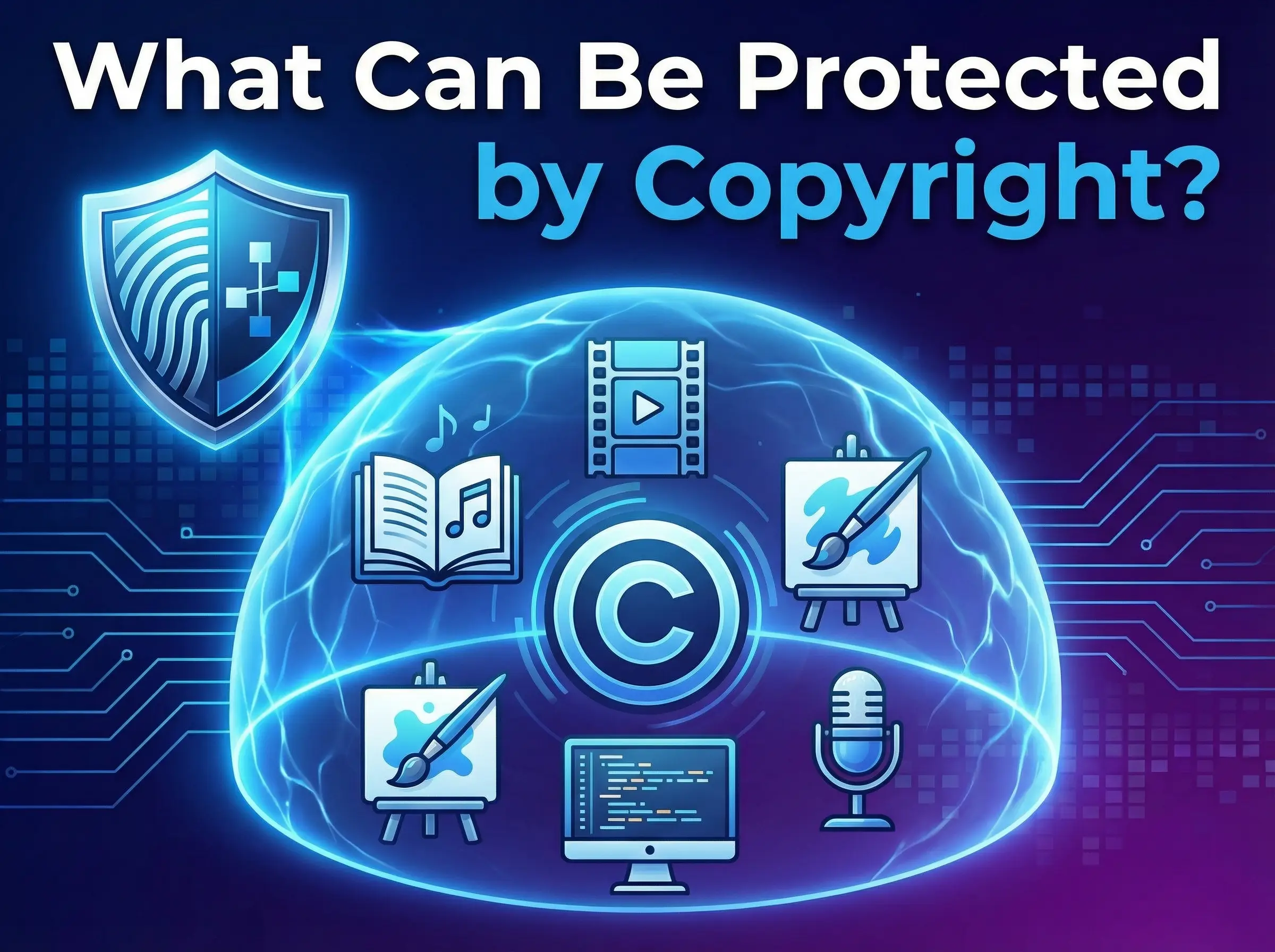
Copyright covers a wide range of creative outputs. These categories often appear in official guidance and search results because they represent the most common use cases.
Advertisement
Written and Literary Works
This includes books, articles, blog posts, essays, scripts, poems, and similar text-based works. Protection applies to the specific wording and structure, not the underlying facts or ideas described.
For example, two people can write about the same topic, but each author’s unique wording and organization are protected separately.
Visual Art and Images
Advertisement
Drawings, paintings, illustrations, photographs, digital art, and graphic designs are typically protected once they are created and saved in a fixed form.
Protection covers the visual expression itself, such as composition, colors, and arrangement. It does not protect general styles, techniques, or artistic concepts.
Music and Sound Recordings
Copyright can apply to multiple layers of music:
• Lyrics
• Musical composition (melody and structure)
• Sound recordings (the recorded performance)
Each layer can be protected separately, which explains why licensing music often involves multiple rights.
Film, Video, and Audiovisual Works
Movies, videos, animations, online content, and recorded presentations are protected as audiovisual works. This protection covers the combined visual and audio expression, not the underlying idea or storyline concept alone.
Need help? Our tools can help you identify potential IP conflicts before they become costly problems.Try a free scan →
Software and Computer Code
Source code and compiled code are generally protected as literary works. Copyright applies to the specific code written, not to the function, logic, or idea behind the program.
This distinction is especially important in software development, where multiple programs may perform similar tasks using different code.
Advertisement
The Idea vs Expression Distinction
One of the most misunderstood areas of copyright is the difference between ideas and expression.
Copyright protects how something is expressed, not what the idea is.
• An idea for a story is not protected
• The written story itself is protected
• A business concept is not protected
• The written description, presentation, or branding may be protected
This distinction explains why people can independently create similar works without infringement, as long as they are not copying the same expression.
What Copyright Does Not Protect
Advertisement
Understanding what copyright does not protect is just as important as knowing what it does.
Ideas, Concepts, and Methods
General ideas, systems, methods, procedures, and concepts are excluded from copyright protection. This includes business models, game mechanics, teaching methods, and abstract themes.
Advertisement
Facts and Data
Facts themselves are not protected, even if they are discovered or compiled by someone. Copyright may apply to the creative selection or arrangement of facts, but not the facts alone.
Need help? Our tools can help you identify potential IP conflicts before they become costly problems.Try a free scan →
Short Phrases, Names, and Titles
Advertisement
Single words, short phrases, slogans, titles, and names are generally not protected by copyright. This is a frequent source of confusion, especially for creators naming products, brands, or projects.
Other forms of intellectual property may apply in these cases, but copyright usually does not.
Styles and Aesthetic Approaches
Artistic styles, visual aesthetics, and general creative approaches are not protected. Copyright applies to specific works, not to the overall “look and feel” or genre.
Advertisement
Human Authorship and AI-Generated Content
Need help? Our tools can help you identify potential IP conflicts before they become costly problems.Try a free scan →
One of the most searched and least clearly understood topics is how copyright applies to AI-generated material.
Current guidance emphasizes human authorship as a core requirement. This means:
• Fully autonomous AI output may not qualify for copyright protection
• Human involvement can matter, but the level and nature of that involvement is often unclear
• Simply prompting an AI system does not automatically establish authorship
This uncertainty is why many people remain hesitant after reading existing explanations. The boundaries are still evolving, and clarity often depends on how much creative control a human exercised over the final result.
Fixation: Why “Saved” Matters
Advertisement
Copyright requires that a work be fixed in a tangible medium. In practical terms, this means the work must be recorded or saved in some form.
Examples include:
• Written text saved digitally or on paper
• Images stored as files
• Music recorded as audio
• Code saved in a repository
Ideas that exist only in your head, or performances that are never recorded, generally do not qualify for protection.
Copyright vs Other Forms of Protection
Many people search about copyright when they are actually concerned about broader protection.
Copyright is only one category. It protects creative expression, not brand identity, inventions, or business identifiers. This overlap is a common reason people leave searches feeling uncertain, even after reading multiple pages.
Understanding what copyright covers helps clarify when it may or may not be the right tool for protection.
Advertisement
Common Situations Where People Feel Unsure
Search behavior shows that uncertainty often appears at specific moments:
• Before publishing or launching content
• Before selling digital products
• When using AI tools
• When sharing work publicly online
• When collaborators are involved
These situations trigger concern because once content is public, people worry they may lose control or protection.
Neutral Summary: What Copyright Protection Really Covers
Advertisement
Copyright protects original, human-created expression that is fixed in a tangible form. It does not protect ideas, facts, short phrases, styles, or general concepts.
Most confusion comes from assuming copyright works as a broad ownership shield. In reality, it is narrower and more precise. Understanding those boundaries makes it easier to decide what questions to ask next, and when additional clarity may be needed.
This distinction alone resolves much of the hesitation people feel when navigating copyright for the first time.